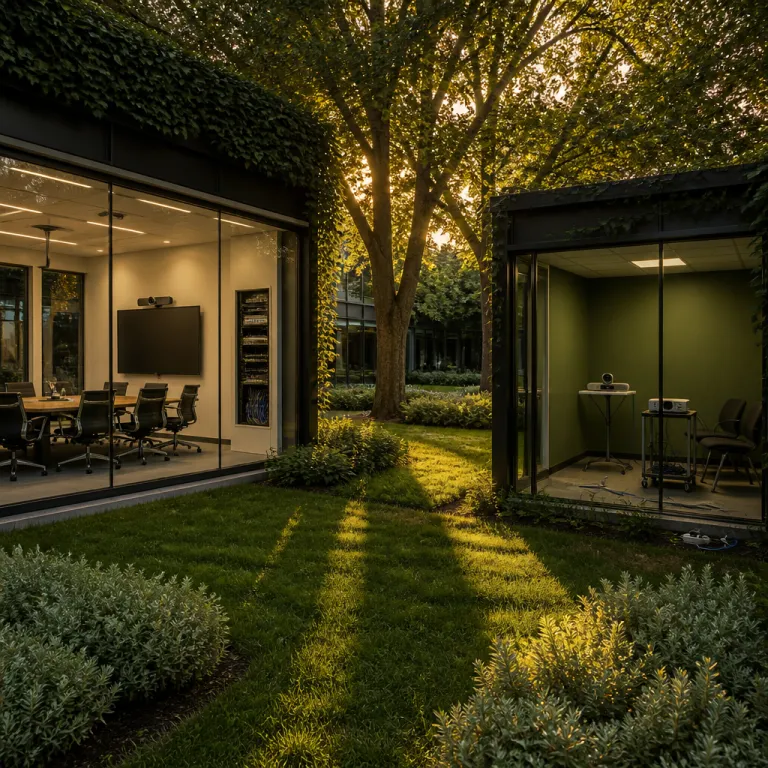
The three participation gaps that define hybrid meeting equity
Hybrid meetings often fail long before the agenda starts, because the underlying infrastructure quietly decides whose contributions matter. When you examine any recurring hybrid meeting across your organisation, you usually find three structural participation gaps that shape engagement long before employees feel safe to speak. These gaps turn many virtual meetings into one way broadcasts where remote participants spectate while people in the conference room drive the real conversation.
TL;DR: Most hybrid meetings are inequitable because (1) remote people are hard to see, (2) they are harder to hear, and (3) their input is less likely to turn into documented decisions. Fixing this requires rethinking room design, camera and microphone placement, and how you use AI meeting intelligence to track contributions and follow up.
The first gap is visual, and it is about who is actually seen in the meeting room and on screen. In many hybrid meetings, a single wide angle camera shows a distant table, so remote attendees cannot read faces, body language, or subtle reactions in real time. When hybrid work relies on this kind of low fidelity video, meeting equity collapses because remote participants cannot track the conversation flow or judge when to enter it, which observational studies from major video conferencing vendors and internal UX research teams consistently show can cut remote speaking time by roughly half compared with in room peers.
The second gap is audio, and it determines who is clearly heard in both directions. Poorly tuned meeting technology often amplifies people closest to the microphone while remote attendees sound faint or distorted, which makes in room employees feel more authoritative by default. Over time, this audio imbalance trains participants equal in expertise to contribute less if they join as remote participants, because speaking requires more effort and yields less impact; internal audits at several large enterprises, including global professional services and technology firms, frequently show in room speakers accounting for 70–80% of total talk time in recurring hybrid meetings.
The third gap is conversational, and it shapes who receives follow up on their input after the hybrid meeting ends. When action items are captured informally in the room, remote attendees rarely see how their comments translate into decisions, tasks, or a written report. This conversational gap compounds over many meetings, so employees feel that remote work puts them on a slower track for influence, visibility, and promotion, even when their ideas initiated key projects.
Hybrid meeting equity technology exists to close these three gaps simultaneously, not to add cosmetic features. The goal is to design meeting rooms and virtual environments where participants equal in role and expertise experience the same visual presence, audio clarity, and conversational follow through. Without that architectural foundation, no amount of facilitation training or camera on policies will make hybrid meetings genuinely equitable or turn passive virtual meetings into effective collaboration.
How room configuration and camera choices entrench or fix inequity
Most organisations underestimate how much the physical room dictates the power dynamics of hybrid meetings. A traditional conference room with a long table and a single front mounted camera turns in room employees into a panel and remote participants into an audience. In that layout, the meeting technology reinforces hierarchy, because the people physically closest to the screen and microphone dominate both audio and video, while remote colleagues appear as small, easily ignored tiles.
To support true meeting equity, you need to treat meeting rooms as broadcast studios rather than generic meeting spaces. That means designing each hybrid meeting room so that every seat has equal sightlines to the display, equal proximity to microphones, and equal representation on camera in real time. When you combine this with high quality audio processing and adaptive echo cancellation, remote attendees can finally hear side comments, clarifications, and emotional tone instead of only the loudest voices, which field tests by AV integrators and internal IT teams typically show increases remote speaking time by 20–30% in before and after measurements.
Camera strategy is where many hybrid meetings either fail or transform. A single static camera at the end of the conference room forces remote participants to interpret a distant tableau, which makes it hard to feel included or to judge when to interject. By contrast, a multi camera configuration with speaker tracking and framing for individuals or small groups lets remote participants see faces at eye level, which makes the virtual meeting feel closer to an in person discussion and reduces the need for people to repeat themselves.
Display layout matters as much as camera placement in any equity focused hybrid design. When the main screen shows only shared content and hides remote participants, people in the room unconsciously treat remote attendees as secondary, because they are literally out of sight. A better pattern is to dedicate one display to content and another to gallery views, so employees feel that remote participants occupy persistent, visible seats in the meeting spaces and can react in real time to what is being presented.
IT leaders should also rethink how they use in office displays outside formal meeting rooms to support ongoing collaboration. For example, using workplace communication dashboards on office TVs can keep hybrid work teams aligned on priorities, metrics, and upcoming virtual meetings without relying on yet another notification stream. Over time, these visual cues help employees feel that remote work and office work share the same information environment, which reinforces meeting equity beyond the conference room itself and reduces the sense of two separate cultures.
Practical room configuration checklist
- Position the primary camera at seated eye level, centred on the short side of the table, with a field of view that captures every chair without extreme distortion.
- Use at least one additional camera or a pan tilt zoom unit for larger rooms so remote participants can see close ups of speakers and whiteboards.
- Install a ceiling or table microphone array so that no seat is more than 1.5–2 metres from a pickup point, and tune levels to minimise volume differences.
- Dedicate one display to shared content and a second display to a persistent gallery of remote participants.
- Test sightlines from every seat to ensure that both content and remote attendees are clearly visible without twisting or leaning.
AI meeting intelligence as an equalizer, not a novelty feature
Artificial intelligence is often marketed as a futuristic add on for meeting technology, but its real value lies in closing the conversational gap. When AI systems can attribute comments to specific participants in real time, they create an auditable trail of who contributed what during hybrid meetings. That attribution makes it easier for managers to ensure that remote participants receive follow up, recognition, and ownership of action items after the virtual meeting ends, instead of being remembered only as silent tiles.
Modern AI meeting equity tools can analyse speaking time across participants and generate a report that highlights imbalances. If the data shows that people in the room consistently speak three times longer than remote attendees, you have a measurable signal that the hybrid meeting format is failing. Over several meetings, these analytics help leaders adjust facilitation, room configuration, and even team norms so that employees feel their voice carries equal weight regardless of location, and so that improvements can be tracked with concrete before and after KPIs.
Action item extraction is another area where artificial intelligence can support equity focused hybrid practices. When AI captures decisions, tasks, and deadlines from both in room and remote attendees, it prevents the informal hallway recap from becoming the real source of truth. Linking these AI generated summaries to video based training solutions also helps new employees feel included in ongoing projects, because they can review past virtual meetings and understand the conversation flow that led to current priorities without relying on second hand explanations.
Cross platform AI assistants now operate across Zoom, Microsoft Teams, Google Meet, and Webex, which changes how organisations should think about meeting technology. Instead of treating each platform as a silo, IT leaders can design a unified layer of meeting intelligence that follows employees across tools and devices. This approach is especially powerful for hybrid work, because it ensures that remote participants joining from different systems still benefit from the same high quality transcription, summarisation, and follow up workflows, regardless of which meeting platform a particular team prefers.
To avoid privacy and compliance risks, you need clear governance for AI in hybrid meetings. That includes transparent consent notices, retention policies for audio and video data, and role based access to AI generated reports so that participants feel safe contributing candidly. When implemented with this level of discipline, AI becomes less about flashy features and more about building a durable foundation for meeting equity across all your meeting rooms and virtual environments, while still respecting data protection obligations.
Illustrative before/after impact
| Metric (sample team) | Before AI meeting intelligence | After 60 days of rollout |
|---|---|---|
| Share of talk time from remote participants | 22% | 41% |
| Meetings with documented action items | 48% | 86% |
| Remote attendees owning follow up tasks | 29% | 55% |
Why camera on policies and etiquette training are not enough
Many organisations respond to weak hybrid meetings with behavioural fixes, such as mandatory camera on policies or facilitation training. These interventions can help at the margins, but they do not change the underlying architecture that shapes who is seen, heard, and followed up with. When the room layout, audio system, and video configuration are biased toward in person attendees, no amount of etiquette will make remote participants feel truly equal or solve the structural barriers that limit their influence.
Camera on policies often backfire because they ignore the quality of the video experience for both sides. A remote employee on a laptop camera in a noisy kitchen does not gain much meeting equity simply by being visible in a tiny tile on a crowded screen. At the same time, if the conference room uses a single distant camera, the people in the room appear as a blurry group, which makes it hard for remote attendees to read cues or feel included in the conversation flow, even when everyone technically has their camera enabled.
Real change comes from treating hybrid meeting equity technology as core infrastructure rather than optional accessories. That means investing in adaptive audio systems that normalise volume across speakers, beamforming microphones that capture quiet voices, and multi camera setups that frame individuals instead of tables. When these elements work together, participants equal in role can join from any location and still experience high quality communication that supports effective collaboration and reduces the need for follow up clarification calls.
Policy should follow architecture, not the other way around, if you want sustainable hybrid work. Once your meeting spaces provide clear audio, balanced video, and reliable AI generated summaries, you can set expectations about participation, such as rotating facilitation between remote and in room employees. Over time, this combination of infrastructure and norms helps employees feel that hybrid meetings are not a compromise but a default mode of work where remote attendees and office staff share the same influence and access to information.
Leaders should also recognise that every new collaboration tool adds friction unless it is integrated thoughtfully. Research on the hidden cost of large collaboration stacks shows that context switching between many apps can consume several hours per week, which undermines the benefits of even the best meeting technology. A more disciplined approach is to rationalise your collaboration stack so that hybrid meetings, asynchronous communication, and shared documents live in a coherent ecosystem rather than a sprawl of disconnected tools that fragment attention.
Designing a measurable roadmap for equitable hybrid meetings
Transforming hybrid meetings from spectator events into equitable collaboration requires a structured roadmap, not ad hoc upgrades. Start by auditing a representative sample of meetings across teams, capturing metrics such as speaking time by location, number of remote participants, and how often action items reference input from remote attendees. This baseline gives you a clear view of where meeting equity is weakest and where hybrid meeting equity technology can have the greatest impact on participation and decision making.
Next, segment your meeting rooms and meeting spaces into tiers based on strategic importance and retrofit them with appropriate meeting technology. High stakes rooms that host executive reviews or cross functional planning sessions should receive the most advanced multi camera systems, adaptive audio, and AI meeting intelligence. Smaller rooms and huddle spaces can use simpler configurations, but they should still provide high quality audio, clear video, and reliable connectivity for remote participants joining from different locations and devices.
Edge computing and network optimisation play a quiet but crucial role in this roadmap. When remote attendees experience lag, jitter, or dropped audio during virtual meetings, they quickly withdraw from active participation because speaking becomes frustrating. Investing in low latency connectivity, local media processing, and resilient failover paths ensures that real time communication feels natural for both in room and remote participants, which is essential for sustained hybrid work and consistent engagement.
To make this roadmap practical, many organisations use a simple three phase checklist: first, run a 30 day audit of current hybrid meetings and collect baseline KPIs; second, upgrade a small set of pilot rooms and compare speaking time and satisfaction scores before and after; third, roll out successful configurations across additional meeting spaces while standardising AI summarisation and follow up workflows. This staged approach keeps investment focused on what measurably improves hybrid collaboration instead of chasing every new feature.
Finally, embed meeting equity metrics into your regular reporting and governance cycles. Track indicators such as the ratio of in room to remote speakers, the percentage of meetings with AI generated summaries shared to all participants, and survey scores on how employees feel about their ability to contribute in hybrid meetings. Over several quarters, these data points will show whether your investments in hybrid meeting equity technology are shifting behaviour or simply adding more hardware to your conference rooms without changing outcomes.
The organisations that win the hybrid age will treat meeting equity as a design problem, not a personality test. They will build rooms, choose technology, and govern artificial intelligence in ways that make participants equal regardless of where they sit. In the end, the competitive advantage will not come from the longest feature list, but from the steepest adoption curve toward meetings where every voice shapes the work and every contribution is visible in the record.
Sample KPIs for your roadmap
- Average speaking time per participant by location (in room vs remote).
- Percentage of hybrid meetings with AI generated summaries shared within 24 hours.
- Share of action items owned by remote employees across key projects.
- Employee survey scores on perceived ability to influence decisions when remote.
- Incident volume related to audio, video, or connectivity problems per 100 meetings.
FAQ
How do I know if my hybrid meetings are inequitable today ?
Look for patterns such as in room employees speaking far more than remote participants, decisions being finalised after the call ends, and remote attendees rarely owning follow up actions. If remote participants often stay muted, keep cameras off, or message privately that they missed parts of the audio or video, your infrastructure is likely the root cause. A short audit of recorded meetings, combined with a survey on how employees feel about their influence, will usually confirm the problem and give you a baseline for improvement.
What minimum technology should every hybrid meeting room include ?
At a baseline, each room should have a high quality camera positioned at eye level, a microphone array that captures all seats evenly, and speakers that deliver clear audio without echo. The meeting technology should support stable virtual meetings on your primary platforms, with simple controls so participants equal in technical skill can operate it without assistance. Adding AI based transcription and summarisation is increasingly becoming part of the minimum stack for meeting equity, because it ensures that contributions from all locations are captured and shared.
How does AI help remote participants feel more included ?
AI tools can attribute comments to specific participants, track speaking time, and generate action item lists that include both in room and remote attendees. When these AI generated reports are shared consistently, remote participants see their input reflected in decisions and follow up tasks, which reinforces that their presence in hybrid meetings matters. Over time, this transparency helps employees feel that hybrid work offers equal opportunities for impact and that their contributions are visible to leaders.
Are multi camera systems necessary for smaller meeting spaces ?
In small rooms with only two or three people, a single well placed camera can often provide sufficient meeting equity. However, if those rooms frequently host hybrid meetings with several in room employees and multiple remote participants, a simple multi camera setup can dramatically improve how clearly faces and reactions are seen. The decision should be based on meeting patterns, not room size alone, and should be validated with feedback from remote attendees after a trial period.
What KPIs should IT leaders track to measure meeting equity ?
Useful KPIs include speaking time distribution by location, the percentage of meetings with shared AI summaries, and survey scores on how employees feel about their ability to contribute when remote. You can also track adoption rates of upgraded meeting rooms, incident tickets related to audio or video quality, and the share of key decisions documented in accessible reports. Together, these metrics show whether your hybrid meeting equity technology is changing behaviour or simply adding more equipment without improving outcomes.
How should we handle privacy and compliance for AI in hybrid meetings ?
To stay compliant with regulations such as GDPR, clearly inform participants when meetings are recorded or transcribed, explain how long data will be retained, and specify who can access AI generated summaries and analytics. Limit retention of raw audio and video to the minimum period needed for business purposes, and use role based permissions so that only authorised people can review detailed transcripts. Regularly review these policies with legal and security teams so that your hybrid meeting equity strategy protects both employee trust and regulatory compliance.